
Our Location
304 North Cardinal St.
Dorchester Center, MA 02124

Choose the right tray shape, measure your surface, and build a practical coffee table or entryway arrangement with space for everyday life.
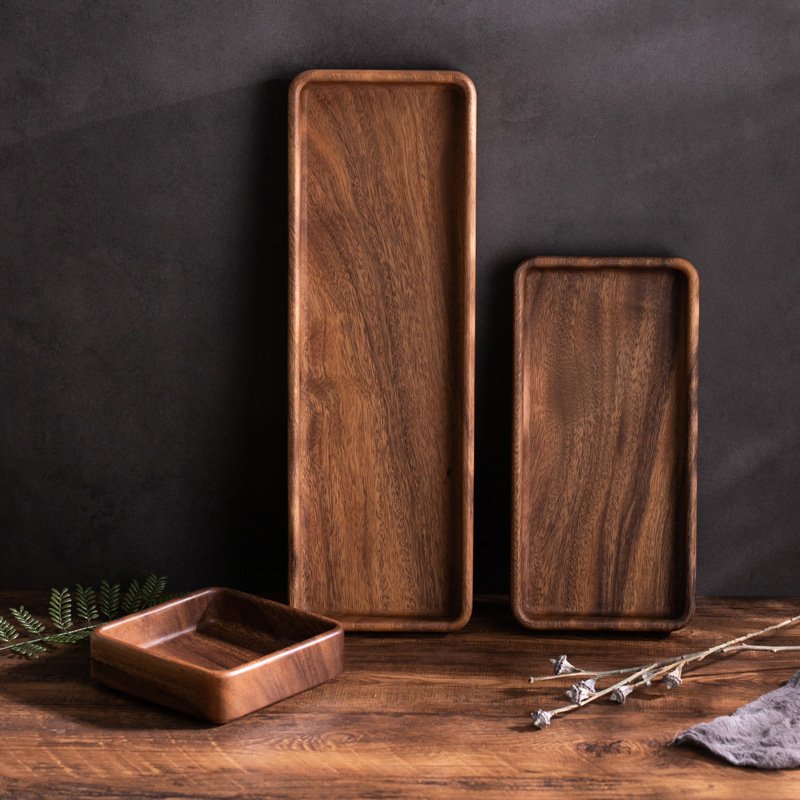
A wooden tray can make scattered objects feel like one arrangement, but choosing the wrong size can leave a table less useful than before. Start with what the surface needs to do, then choose a shape and a small group of objects that support it. The aim is a display you can live with, rather than a collection you constantly move out of the way.
This guide focuses on wooden tray decor for coffee tables and entryways. It uses the sizes in our wooden decorative tray collection as concrete examples, with a simple way to check fit before buying. The styling suggestions also work with a tray you already own.
On a coffee table, a tray can hold a decorative grouping that moves together when you need the surface. In an entryway, it can give keys and other small belongings a consistent home. These jobs need different amounts of empty space, so avoid copying a photograph without considering how you use the room.
Clear the surface and put back only what you reach for regularly. If your coffee table is also where you eat, work, or play games, a compact arrangement is easier to live with than a large display. If mail piles up on your entryway console, decide where it will go before decorating the entire top.
Mark the proposed tray footprint with paper. Sit on the sofa or walk through the entryway, then check whether the outline blocks anything you need. Leave a practical place for a cup, phone, or bag beside it. There is no universal percentage of tabletop that must be covered; your routine is the useful test.
Next, measure the base of each object that will sit inside. A tray’s exterior dimensions do not establish its interior dimensions. Raised sides and rounded corners reduce the usable area. If the fit is close, obtain the interior measurement rather than assuming the object will fit because the outside widths match.
For example, the 28 × 14 × 3.3 cm rectangular option is approximately 11.02 × 5.51 × 1.30 inches overall. That can help you compare its footprint with your table, but it does not guarantee that a 14 cm-wide vase base will sit inside. Think of the measurement as a planning boundary, not an interior clearance.
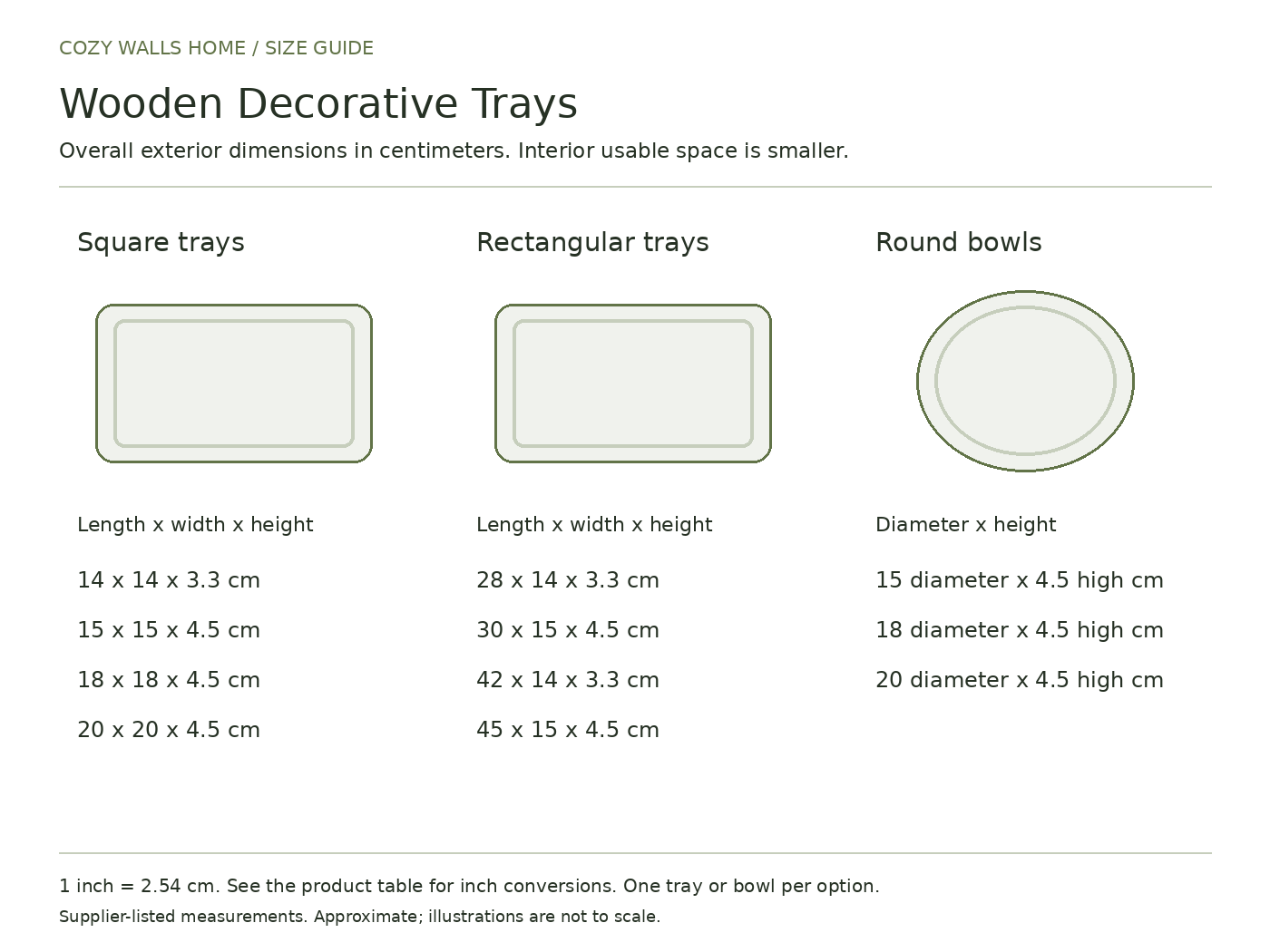
| Shape | A useful starting point | Check before ordering |
|---|---|---|
| Square tray | A small side-table grouping or everyday accessories | Enough remaining tabletop for the items you use |
| Rectangular tray | A longer console or a narrow coffee-table grouping | The usable interior and access to nearby drawers |
| Round bowl | A curved landing spot for small belongings | The opening, depth, and largest object’s footprint |
Shape does not determine capacity on its own. A long narrow tray may hold less of your intended arrangement than a shorter, broader one. Place paper stand-ins for the objects inside the outline and compare the result. For a tray with several sizes, select the exact option rather than relying on the main photograph.
Put down the tray, then add one object with a shape you like. A small vase is a straightforward example because you can judge the silhouette before adding stems. Our ribbed ceramic bud vase is about 12 cm tall, but its base still needs to be checked against the tray’s usable interior.
If the arrangement feels incomplete, try a quieter object beside the focal piece. It could be something you already own, such as a small keepsake. Books can sit next to the tray instead of automatically going underneath everything. Leave a gap between distinct shapes so the display does not turn into a pile.
Sit where you normally sit. Can you see the person opposite? Is there somewhere to put down a drink? Can you lift or move the grouping comfortably? If one answer is no, remove an object or choose a smaller footprint. A useful coffee table is more inviting than an arrangement that makes every normal activity awkward.
Give each everyday item a simple role. Keys can go in the tray, while mail may need a separate standing organizer or drawer. Avoid putting decorative stems directly in the space where you drop your keys. The best arrangement is easy to use when you arrive carrying bags.
Keep the surrounding console quieter. One wall accent can provide texture above it without using more tabletop area. Our macrame wall hanging guide explains how to compare the scale of a woven piece with nearby furniture. Test the wall outline and tray placement together before buying either.
For this listing, the material is specified as wood and the option names use “Walnut.” The exact species has not been verified, so we describe the appearance as walnut-tone rather than making a solid-walnut claim. Compare the product photographs and expect some variation in grain and color.
Only when the specific finish and product are confirmed for that purpose. Food-contact certification has not been supplied for this decorative tray. Use a separate suitable plate or food-safe liner for food, and do not assume the wood is approved for hot cookware.
Make a quick reset part of using the space: return the keys, remove stray receipts, and dust the surface. Wipe the tray gently and dry it promptly. Avoid soaking or putting it in the dishwasher. A tray creates a boundary, but it cannot replace deciding which items belong there.
Ready to compare sizes? View the wooden decorative tray with its full dimension chart. Check the selected option, included piece, and available space before adding it to your cart.
